Book Review: The Magicians

The Magicians by Lev Grossman (Fantasy, 416 pages, 2009)

One could summarize The Magicians as follows: it is a coming of age novel in which a boy discovers the magical lands he read about and longed for as a child are real.  This assessment would certainly be true, but it would also do a grave injustice to this complex and compelling novel.

Grossman’s book is, indeed, a coming of age story.  It explores the delight, depravity, and despair of teens struggling to come to terms with the world and with themselves.  And I really do mean explores.  Grossman does not toss such themes in lightly, but delves deeply, weaving into the very bones of the plot alienation, dis-affectation, young love, sex, jealousy, and the contradiction of one’s hopes for the future with the often less-than-satisfying reality of that future.

The Magicians is also, indeed, about the protagonist’s discovery that a  seemingly fictional land called Fillory (clearly modeled on Narnia) is a real place.  Not just real, but Real.  As in filled with many dark and terrible things not spoken of in the dog-eared pages of the novels he loved as a child.  As in another parable for casting off the silly, golden-tinged dreams of youth and replacing them with the more nuanced and treacherous realities of adulthood.

The story follows Quentin Coldwater, a young man who, when preparing to depart Brooklyn for college, finds himself instead transported to a secret school for magic.  Always feeling that he was destined for a future less mundane than the Ivy League, Quentin quickly embraces his new situation, discovering his power, making clever new friends, and falling in love.  All in Quentin’s life, however, is not roses.  One thing The Magicians does extremely well is face head on the fact that new circumstances will not change who a person fundamentally is.  And Quentin is fundamentally unhappy, always feeling as if the now is not enough, as if something is missing.

The plot soon takes a darker turn, and I will not spoil it’s many twisting and satisfying turns by recounting them here.  Suffice it to say, the real magic of The Magicians is not it’s central conceit, nor its realistic characters, nor its clever upending of canonical fiction, such as the Chronicles of Naria or Harry Potter.  The magic of The Magicians is Grossman’s truly masterful plotting.  Every piece of the tale, no matter how trivial it may seem when first related, clicks into place by the end of the novel, creating (as if bewitched by a spell) a brilliant narrative structure.

Truly, what Grossman has created here is masterful.  Dark, sometimes ugly, and often uncomfortable.  But masterful nonetheless.
How do you make your garden grow?

I’ve been meaning to write this post for awhile now (since the summer, actually), but have been so busy and stressed that I haven’t found the time.  The last few months have been hard, both personally and creatively, and sometimes the motivation to keep at it seems as fleeting as smoke.  Appropriately, then, when I most needed some inspiration, I remembered what I had wanted to write about so many months ago–and why.

So, here goes.  Bear with me.

My mother is a gardener.  Not the kind of gardener you’re probably picturing (a retired lady with a sun hat and a bed of Dahlias), but a hard-core working machine who labors rain or rain (she lives near Seattle), year-round to coax beauty and wonder out of 16 rambly acres on a Pacific Northwest island.  For the last 15 years, she’s planned, experimented, planted, replanted, designed, redesigned, weeded, ripped out, and redone an ever-growing landscape of incredible beauty.

Her dividends have been satisfaction, joy, and recognition, both locally and in some of the country’s leading gardening mazagines (Country Living, Sunset, Seattle TimesFine Gardening).

When I last visited (in August), I remember watching her at work and realizing that what she had accomplished with her garden was not so different from what I was trying to do with my writing.

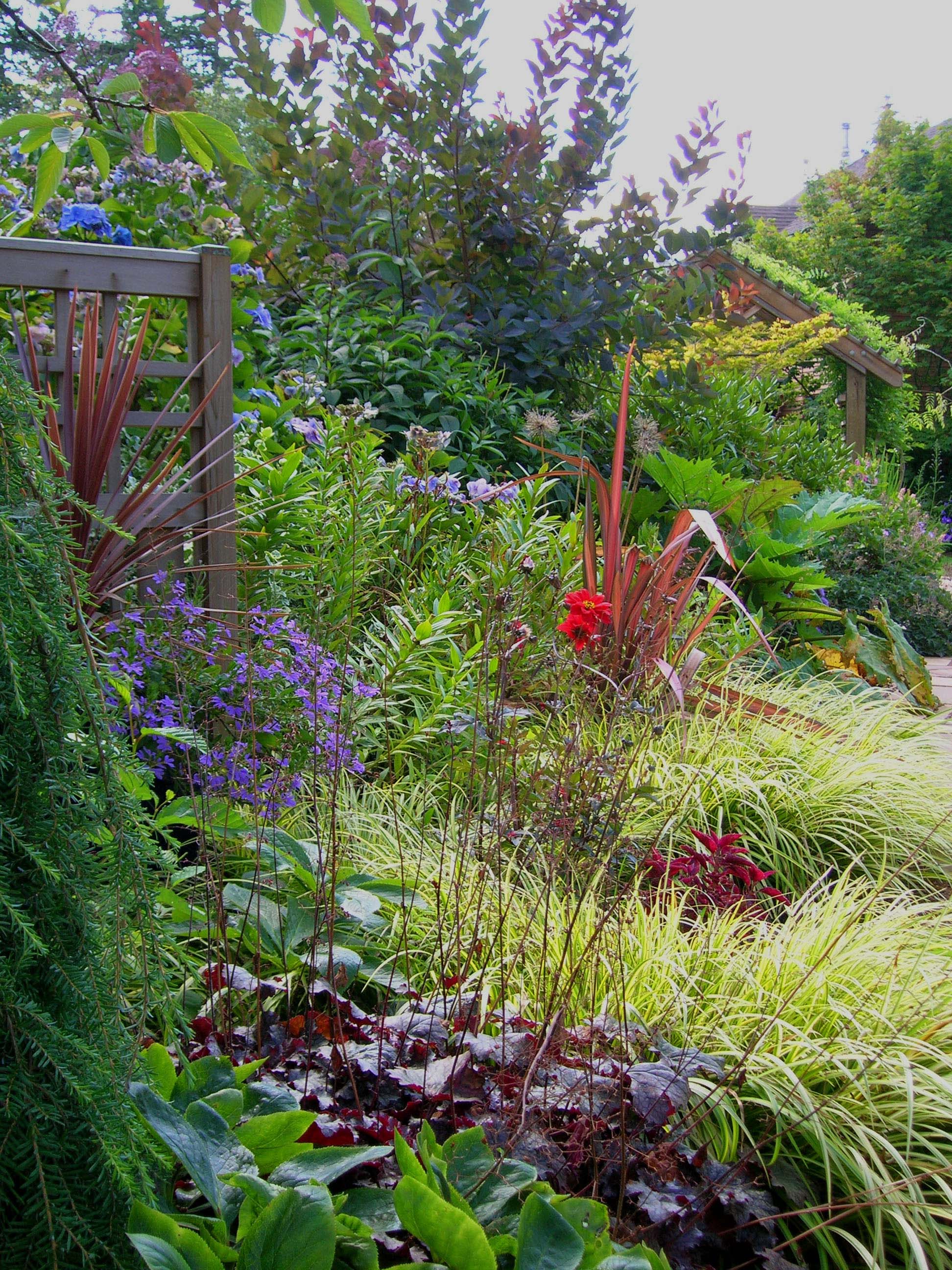
Her garden is not just a series of pretty arrangements of plants, trees, and bushes.  It has a story running through it, a logic and a rhythm.  English cottage plantings are woven into a woodland by a shushing stream.  Sinuous hedges of boxwood lure you towards a pond full of lily pads and the bridge across the water deposits you at the edge of a path. Follow it and you might find a secluded glade in yellows and blues or an arching pergola hung with roses.  Each “room” in the garden evokes a different mood, has different pacing, and features unique characters.

The garden is my mother’s great work in progress, constantly in a state of unfolding.  As she prunes, weeds, adds, and subtracts, the story evolves.  And just when you think you have it figured out, you arrive at the edge of an enigmatic, eathen maze, dotted with colorful wooden pillars and presided over by a looming cairn of stones.  Plot twist!

Just as my efforts to become a better writer and tell more interesting stories might begin with a wisp of an idea or a glimpse of a character, her garden began with an old hot tub she decided to covert into a bubbling pond.  It looked naked sitting there all by itself, surrounded by empty lawn, so she built a structured garden around around it, bit by bit, year by year.

She visited other gardens, read about gardening, learned what would grow in her zone and what would not.  There was trial and error, good years and bad, and lots and lots of hard, cold labor.  All those things have transformed that first kernel of an idea into a world class garden that gives my mother (and the many people who visit annually) incredible pleasure.

So, on days when I feel despair of ever improving, of ever finishing this chapter, or that story, or of ever selling my work, I think about my mom’s garden.

Work hard, love what you do, focus on the task in front of you and — one day — you just might find you’ve created a true work of art.

Thanks for the inspiration, mom.

Fall fast-forward

Snow during Halloween weekend?  Seriously?  Where’s our fall, eh?  Huh?  Huh?

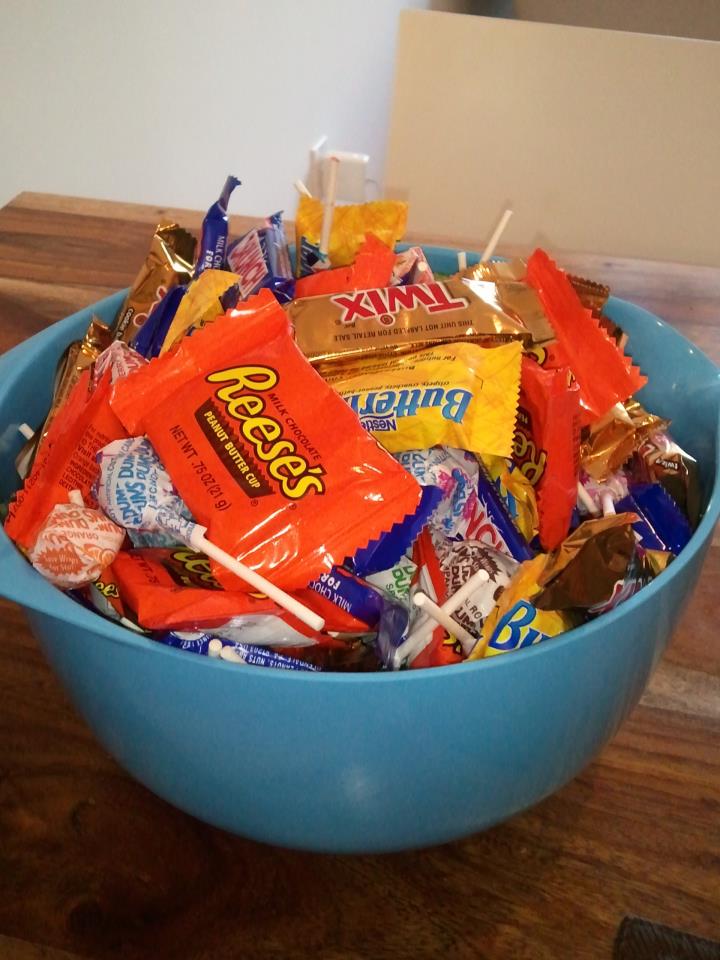
Fortunately fall will be making a comeback tomorrow, just in time to sit out on the stoop with Halloween candy for all the adorable Park Slope kiddies.  That is, assuming we manage to resist the siren call of the trick o’ treat bowl and have anything left to hand out.

Halloween is a popular holiday around Casa Suri.  Sid, having grown up in New Orleans with its Mardi Gras costume traditions, loves to dress up (this year we went as Clark Kent and Lois Lane; Clive Bixby and Julianna — Phil and Claire’s alter-egos on Modern Family — were discussed, but there was no way I was wearing nothing but a trench coat in the middle of a blizzard).

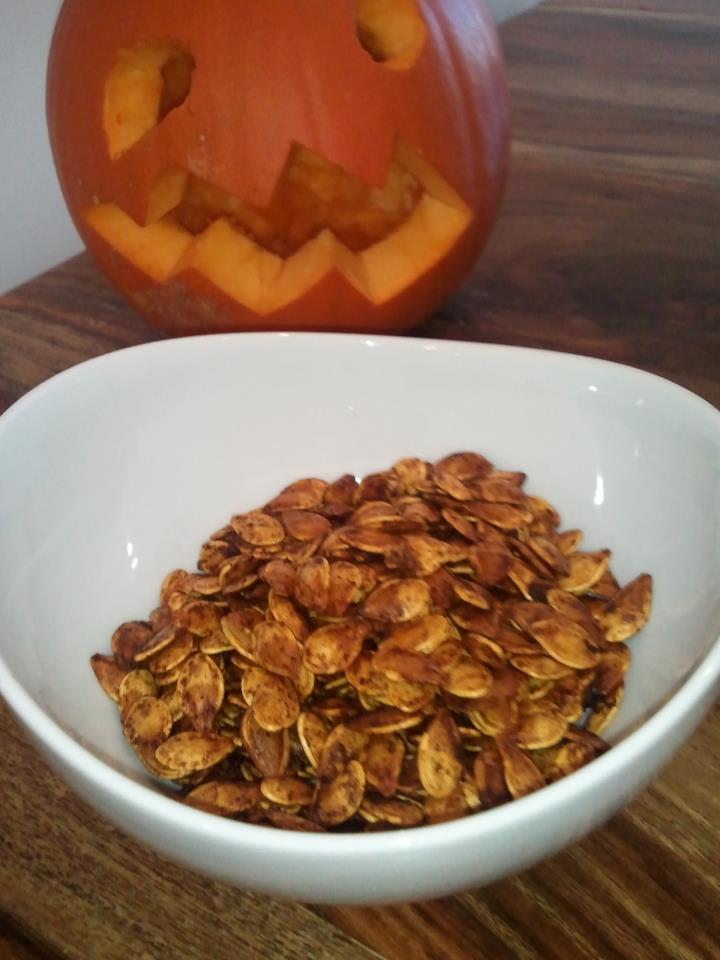
I, having grown up on a farm in a very food-oriented family, love, love, love to carve pumpkins–primarily as an excuse to extract and roast the delicious seeds.

This year’s seed flavor combo: olive oil, salt, and a cayenne-curry spice blend.

They’ll be gone by tomorrow, no question.  In fact, I can think of no better snack to munch on while spending the afternoon working on revisions to the novel.

The sun’s back out, the snow is melting, and life is good.  Happy All Hallows Eve!

Managing our expectations

I’ve been thinking a lot about managing my expectations lately, and not just in relation to my writing but in many aspects of life.

I find that if I hope for something too hard, it can drive me beyond distraction, making it impossible to focus on anything else…and, if my hopes go unmet, it can be utterly crushing.   On the other hand, when I temper my expectations with too big a dose of pragmatism, I fear ending up with enervated dreams lying limp and lifeless on the floor.

What’s a girl to do, then?  How do we find that middle ground?  Where is the space between weeping inconsolably every time we receive bad news and shrugging with a practiced indifference that feels a bit more genuine every time we reach for it?

Coming from academia, I’ve literally been trained in the art of expecting rejection.  In fact, I know very few people who’ve escaped graduate school without a nigh-on ingrained expectation of constant criticism, failure, and stymied hopes.  Oddly, though, most of these people are also some of the least likely to give up.  It’s as if feeling constantly “not good enough” liberates us from the fear of failure and thus the fear of continuing to try.

This is a good thing, but it comes with some bad potential side effects, such as resignation.  We keep putting ourselves out there while holding on to conflicting and equally powerful beliefs:  that we’ll get where we’re headed someday, if only we work hard enough, and that we are most likely to always be told “no” to everything we strive for.

It’s numbing, honestly.  And while numbness is good when it comes to dealing with rejection, it’s terrible for cultivating hope.

Maybe there’s no good way to deal with rejection and dashed hopes, no satisfying means of managing our expectations.  Maybe it’s just all part of the ride: hope, fear, anticipation, dejection, panic, self-hatred, and, finally, the return of a rising sweep of hope.

Contemplating these things always makes me think of that wonderful scene from the original Parenthood film, in which Steve Martin, in the midst of a terrible panic attack, suddenly feels the clattering wheels of a roller coaster dragging him inexorably towards the precipice and, just as he imagines his car tipping down into oblivion, his gagging fear gives way to the elated thrill of speeding downward, hurtling towards the next, unknowable turn on the track.

Life is like that sometimes.

Weekend Update

This week, by the numbers:

Words written on the novel: 1,160

Short story rejections received: 1

Short stories on sub: 5

Slides prepared for lecture: 70

Exams graded: 80

Calories burned by staying on diet: 2,650

Days of exercise: 1 😦

Degree of crankiness (on a scale of 1-10): 2 (with occasional spikes of 6-7, mostly while waiting for the Q64 bus)

Today will be devoted entirely to relaxing around the house, preparing for my husband’s birthday party, and getting my weekly novel word count pushed a bit higher.  Tomorrow it’s all about getting next week’s lectures finished.

That’s all the news that’s fit to print.

Miranda out.

Writer’s Workspace: 10/19

Good morning!  Welcome to this writer’s workspace.  Here’s what’s happening liiiiiiiiiiiiiive at Miranda’s desk:

What I’m working on:  forward motion on the second draft of my archaeological time-travel novel, ABSENT, is the order of the day (well, that and endlessly making slides for my class lectures).  I hope to squeeze in at least 1K words this morning.  In the scene below, the protagonist, Emily, attends a dinner party.

Snippet from the screen:  “Down the table, Kelly’s husband, James, a real estate agent, expounded to no one in particular about Park Slope housing prices.  His cheeks were flushed and his voice over-loud.  Kelly must have squeezed his leg under the table because he turned an even deeper shade of scarlet and subsided.  Mark was refilling the wine glasses and paused a moment to offer James an affectionate smile.  Emily had always loved that about him; he could find warmth in his heart even for the biggest of jackasses.”

On the iTunes: I’m on an Afro-Cuban Jazz kick these days.  Mongo Santamaria is playing right now.

In the mug: Numi Chinese Breakfast – I am nothing if not a creature of habit.

Out the window: it’s fall at its saddest out there — dark and gloomy, like someone milled children’s tears into a grey film and draped it across the sky.

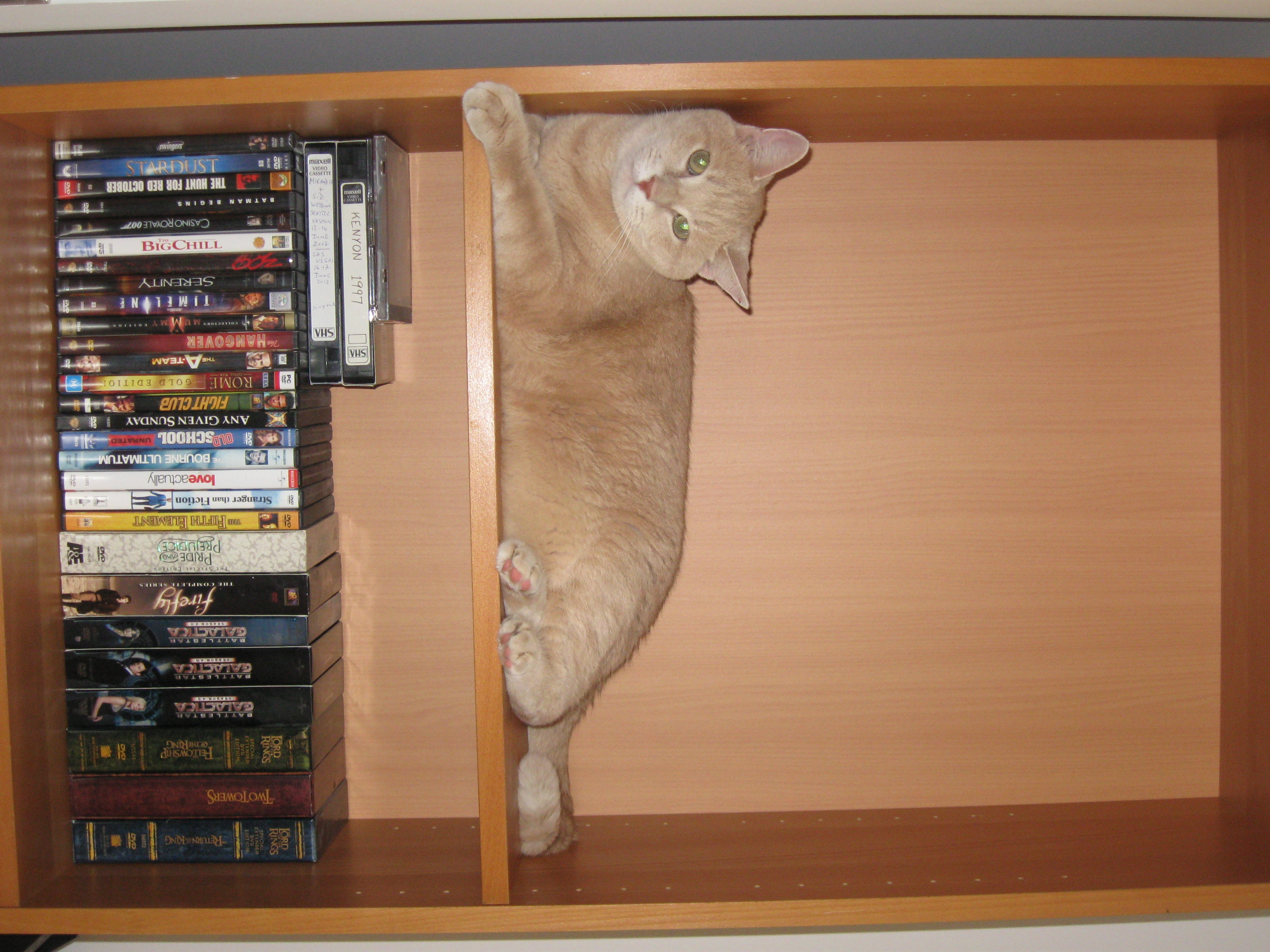
Keeping me company: his Royal Furriness, Mr. Ramses, King of Cats, is seated on his throne.  Now that I have a Nook, there’s some free room on the bookshelf.  As with any free space in the apartment, Ramses has interpreted this as being his rightful domain.  Perhaps he is correct.

A little procrastination never hurt anyone: First, in the “end-is-nigh, the publishing industry will go up in fire and flames” genre, there’s this from the New York Times re: Amazon starting up their own publishing fiefdom.  Second, if your bent is more scientific, check out the latest on DARPA research into long-term space travel.  And, for a lark, John Scalzi challenges us with some rather amusing writing prompts drawn from Scifi/Fantasy movies.


Alrighty, folks!  Back to work.

Please share your goals for the day, what you’re working on, and any juicy links in the comments.

Book Review: all these things i’ve done

all these things i’ve done by Gabrielle Zevin (2011, Young Adult, 368 pages)

Set in a dystopian New York City, “all these things i’ve done” tells the story of Anya Balanchine, the 16 year old daughter of the city’s most famous, deceased mob boss.  In this future world, though, it isn’t booze or drugs that Anya’s Family runs, but another now-illegal commodity:  chocolate.  Anya’s story is part of coming of age, part mystery, part romance, and 100% made of awesome.

What makes the book tick (and work) so very effectively is Zevin’s excellent portrayal of Anya.  From the very first paragraph, this girl literally reaches off the page, grabs you by the lapels, and pulls you into her world.  The story is told in the first person, and Anya’s voice and worldview are fresh, distinctive, and endearing.  I found her an incredibly well-written protagonist – funny, loyal, pragmatic (but not without the occasional flair for the dramatic), and flawed.

Nominally under the guardianship of her ailing grandmother, Anya has been left to care for her younger sister and older brother (who is mentally unfit after narrowly surviving an assassination attempt that killed their mother).  Thus, the stakes in this story feel real and weighty.  The plot kicks into gear when Anya’s ex-boyfriend is poisoned by (you guessed it) chocolate he got from Anya.  Sent away to a chillingly horrid future-New York version of juvie, Anya must prove her innocence and protect her siblings.  All of which means getting drawn back into the Family’s illegal affairs.  Mixed into the intrigue is a budding and forbidden romance with the new DA’s son.

Zevin takes a number of fairly familiar YA elements (dystopia, youth in peril, young love…also in peril) and manages to create something fresh and gripping.  This is partly due to a very authentically realized down-at-the-heels future New York, in which water is a vanishingly scarce resource — and one that is rationed along with most other natural resources (fabric, paper, food, etc.).  The success of “all these things i’ve done”, however, rests most squarely on the shoulders of its delightful heroine and her ferocious desire to do whatever it takes to keep her family together.

Gabrielle Zevin, please give me more.

Update from the salt mines – send help!

Okay, so I know this is all my fault…after all, I’ve been aware that I’d be teaching a new class this fall for months (and months, and months).  I really could have gotten a head start on the lectures at any time.  I even had very good intentions to do so.

But I did not.

And now…oh, now.  I’m barely keeping my head above water over here, folks.  It’s 6pm and I just put the finishing touches on a (frankly) pretty sloppy lecture on Maya rituals for class tomorrow.  There’s a pile of exams to grade.  They are quite literally leering at me.  I’ve got nothing (zilch, zero) prepared for next week.  Heck, I’m not even sure what’s on the syllabus for next week.

And writing, you ask?  Writing?  What’s that?  I think I got a few hundred words in over the weekend, but who the hell even remembers the weekend anymore?  That was months ago.  Or so it seems.

I have been told by pretty much everyone that I do much, much better (as a human being in general) when I’m busy.  It’s true, of course.  A little structure in one’s life goes a long way towards shaping action productively (or, at least, preventing entire afternoons spent on the sofa watching back episodes of Dancing with the Moderately Famous People), but the last few weeks have thrown me a little more structure than I can handle.

This too shall pass, I know.  But in the meantime, I’d welcome suggestions for ways to find time to write.  I know a lot of you out there juggle full time jobs, kids, and so on and still manage to squeeze in those precious writing hours.  Where do you excavate them from?  How do you get your brain to ignore the huge piles of Other Stuff you need to do and focus in on writing?

I’d welcome suggestions, as I currently seem unable to prioritize even 30 minutes a day for my writing.  Tricks?  Tips?

Send help!

My Steve Jobs post

In his commencement address at Stanford University in 2005, Steve Jobs rather famously advised those fresh-faced graduates to wake up each morning and ask themselves the following:  “If today were the last day of my life, would I want to do what I am about to do today?”  He continued, saying “And whenever the answer has been “No” for too many days in a row, I know I need to change something.”

After Jobs’ passing last week, my husband was listening to the commencement address and he posed Jobs’ question to me.  Was I happy with my work?  Did I have any regrets about our life?  Was I doing what I loved?

While I’d probably want to spend my last few days on a Caribbean beach or in a tapas bar in Madrid (or somewhere similarly wonderful and relaxing), that’s not a practical option for everyday existence.  So, barring living life as one long vacation (which would probably get tedious after awhile anyway), I honestly can’t think of anything I’d rather be doing in my day to day life than what I do now.

The decision to forgo the pursuit of a tenure-track position in academia was probably the best of my life.  I love teaching and researching part time.  It’s like taking all the best things about being an academic and sloughing away all the worst things.  I can’t think of a job that provides so much bang in terms of stimulation and fun and still allows me to pursue my dream of becoming a writer.  And that’s the real gravy.  When I get to sit down at my computer at 10am on Wednesday and know that (excepting that lecture I haven’t finished) I can spend the entire rest of the day making up stories that maybe, just maybe, someone other than my dad and my crit partners will want to read…well, yeah, to me that’s a life well-lived.

Are there things about my life that are a bummer?  Of course.  Do I wish I could change X or Y?  Naturally.  Do I encounter disappointment, frustration, and – from time to time – a burning hatred of my day job (say, for instance, when it’s time to grade exams…)?  Hell yes.

Still, I wouldn’t trade it away.  I can look in the mirror in the morning and feel that should death sweep out of nowhere to claim me, I am living the life I want for myself.  That is a gift.

Thank you, Steve, for making me realize it.

So, what about you?  Can you say the same?