Book Review: Ysabel

Ysabel, by Guy Gavriel Kay (Fantasy, 416 pages)

If you’ve read any of Guy Gavriel Kay’s fiction, you know he tends towards lyrical language and infuses his stories with a unique sense of languid urgency.  By this, I mean his beautiful prose encourages the reader to linger on each sentence, but the pace of the plot nudges you along insistently.  Ysabel, one of Kay’s most recent offerings, is no exception.

Though set in modern day Provence, Ysabel echoes Kay’s interest in the way history is a dynamic force, malleable, intruding upon and influencing the present.  The story follows Ned, a fifteen year old Canadian spending several months in France with his famous photographer father.  Bored by his father’s work, Ned stumbles (seemingly by accident) into an ancient clash between the Celts and Romans playing itself out endlessly through time.  Just as it melds past and present, Ysabel also deftly weaves a large cast of characters into what is ultimately revealed as an intimate family drama.

Despite the fact I was traveling and incredibly busy, I read this book cover-to-cover in just three days.  Once I picked it up, I found it almost impossible to put down.  I think this had something to do with the way Kay united a classic fantasy with a contemporary coming of age story.  Ysabel is a compelling read, beautifully written and plotted.

Also by Guy Gavriel Kay and highly recommended by this reader: Tigana and Last Light of the Sun.

From inside the belly of the beast

It’s still dark here in Salt Lake City, and a thin layer of icy snow has covered everything.  Is the bad weather following me, or are we finally beginning the slide into our global-warming induced Ice Age?  Anyway, here’s a quick update from the Superstars Writing Seminar in Salt Lake City…

1. Damn, I’m exhausted…and it’s only Day 2

2. Some great insights from Brandon Sanderson on diversification and working multiple projects.  In general, a common theme on Day 1 was a push towards maximizing productivity and output.  Listening to Brandon, and also Kevin J. Anderson, I feel like I’ll really be able to organize my time better.

3. Persistence is another point that’s been coming up a lot.  Brandon’s first big sale was the 6th novel he wrote – and he sold it while he was writing his 13th.  David Farland says: “Make yourself a lightning rod, and lightning with strike.  You aren’t going to get struck while hiding in your basement.”  Truer words have never been spoken.

4. From Eric Flint: when editors look at a submission, they care about only one thing: do I want to keep turning the page?  If the answer is yes all the way to the end, they might buy your story.

5. Also some very practical advice on networking (the geeky, reclusive writer’s bane)…and, apparently, YES, we have to figure out how to do it, because it’s important.  Rats.

6. And, finally, thank you Eric Flint for explaining how the economics of publishing work.  Depressing, but clarifying.

Okay, if you want to know more, you’ll have to sign up and attend next year.  Thus far, I feel like I’m getting my money’s worth.  More to follow…

On the road, again

Today was a travel day for me.  I’m in Salt Lake City to attend a seminar addressing the business side of writing (Superstars Writing Seminar) and being taught by the likes of Kevin J. Anderson, Brandon Sanderson, David Farland, Sherrilyn Kenyon, Eric Flint, and Rebecca Moesta.  While here, I’ll try to provide a few blog updates about the seminar and my adventures – literary and otherwise.

The trip has started out rather inauspiciously, to be honest.  I wasn’t supposed to leave New York until tomorrow afternoon, but the gods of snow (or maybe just some suit at Delta) decided a big storm was coming and canceled my flight (though not a flake of snow has yet fallen).  My only choices were:  come on a 6am flight today or not at all.  So, here I am.  Sleepy and a bit jet-lagged, but here.  It’s cold (around 14 degrees right now) and there’s snow just about everywhere you look.  But, man, the mountains are really pretty, and a hot shower managed to scour away the residual pain of getting up at 4am.

Right now I’m at a little cafe far too cute to exist anywhere outside of a movie (Raw Bean Coffeehouse) and determined to stop using this internet connection to procrastinate 🙂

I’m going to go and write now.  You should too.

See you later.

Fiction and the art of anthropological maintenance

This will be the first in a series of posts discussing anthropology and speculative fiction.  I’ve decided to do this series for several reasons.  First of all, anthropology is my field of study (specifically, anthropological archaeology), so I’ve got a bit of expertise here.  Second, and more importantly, the discipline lends itself well to speculative fiction.  In fact, many great sci fi and fantasy authors have anthropological backgrounds (Mary Doria Russell, Ursula K. LeGuin, Kurt Vonnegut, Gregory Keyes, Octavia Butler, and Chad Oliver, among many others).  In this post I’ll discuss some basic concepts we’ll need for future discussions.  All of the posts on this topic will be tagged as anthropology 101.

So, a brief primer.

Quickly, for those who aren’t familiar, anthropology is the study of humanity.  It is composed of 4 sub-disciplines: cultural anthropology (the study of living cultures), archaeology (the study of past cultures), physical anthropology (the study of human evolution, human biology & primatology with reference to human cultural adaptation), and linguistics (the study of language and its role in the transmission of culture).  So, basically, anthropology covers everything to do with humans and how they interact with each other and with the natural world.  Useful, eh?

Focusing as it does on the varied and splendid world of human cultures, anthropology provides fertile ground for writers, especially those looking to create imaginary but authentic-feeling worlds.  Living and ancient cultures can serve as inspiration for fictional ones, while anthropological perspectives and methods (cultural relativism, participant observation, and ethnography, for instance) provide tools for world-building and character development.

Some concepts:

Cultural relativism is the idea that no one cultural viewpoint or practice is better or worse than any other.  This concept is at the core of modern anthropological method and allows ethnographers objectivity when studying a culture different from their own.

Participant observation is an ethnographic technique in which the anthropologist observes cultural practices and comes to understand their meaning by taking part as much as possible in the culture which he or she is observing.

An ethnography is the end product of (typically a year of) cultural anthropological research.  In it, the anthropologist presents their data and interpretations.  Traditional ethnographies include detailed observations on kinship, religion, material culture/technology, politics, subsistence, economy, gender/age roles, arts/music, and language.  In conducting research and preparing an ethnography, an anthropologist brings two perspectives to bear: the etic and the emic.

The etic perspective revolves around the anthropologist’s interpretations as an objective, scientific observer – an outsider.  Here an anthropologist explains practices and behaviors with reference to larger theories about culture.  Conversely, the emic perspective is the insiders view of their own culture.  Here the anthropologist attempts to understand how a cultural participant makes meaning.

As I’ll discuss in upcoming posts, these methods and perspectives can be immensely useful in:

1. building fictional cultures that feel authentic and fleshed-out

2. writing first contact stories, in which insider and outsider perspectives both play a role in the conflict

3. helping us get inside our characters’ heads and see through their eyes

4. finding inspiration for fictional cultures or characters – by drawing on real cultures (whether living, recently squashed by globalism, or ancient) we save ourselves the trouble of starting from scratch (truth really is stranger than fiction, after all)

5. getting a look at how technology really works: past cultures are a veritable laboratory for the invention and implementation of new technologies (as well as their consequences).  Just because many of these examples aren’t high tech or space-age doesn’t mean they can’t inform how we develop such fictional technologies (and more importantly, how they’ll impact society).

6.understanding how developments (think especially technological ones – on the small scale, things like specific tools, on the large scale, things like agriculture) impact cultural development

7. creating imaginary languages

8. and, generally, helping us think more deeply about how cultures work, how they help us adapt to specific environments (e.g. what works in particular settings, and why), and how people tend to interact with each other (based on race, class, gender, age, and cultural affiliation).

So…stay tuned!  Up first will be an anthropological look at first contact.

ps. let me know in the comments if you think this series will be useful, and if there are any topics you’d particularly like me to discuss.
Writer’s Workspace: 1/8

Good morning!  Welcome to this writer’s workspace.  Here’s what’s happening liiiiiiiiiiiiiive at Miranda’s desk:

What I’m working on: In a few short weeks I’ll be attending a writing retreat (in Vegas! with friends!), for which I must prepare a submission for critique.  So, today’s labor is to polish up the first 9,000 or so words of my latest novel project (“Absent”) and write a synopsis and brief outline to go along with it.  I need to get this done asap, as the Saints play Seattle this afternoon.  Go Saints! (apologies to my hometown…)

Snippet from the screen: “Emily felt a faint wave of embarrassment.  She’d always envisioned her office outfitted with a big comfy armchair, not a hard plastic one looking like an escapee from a 1970’s warehouse of institutionalized furniture.”

On my iTunes: “Why Don’t We Do it in the Road” by The Beatles

In my mug: English Breakfast tea

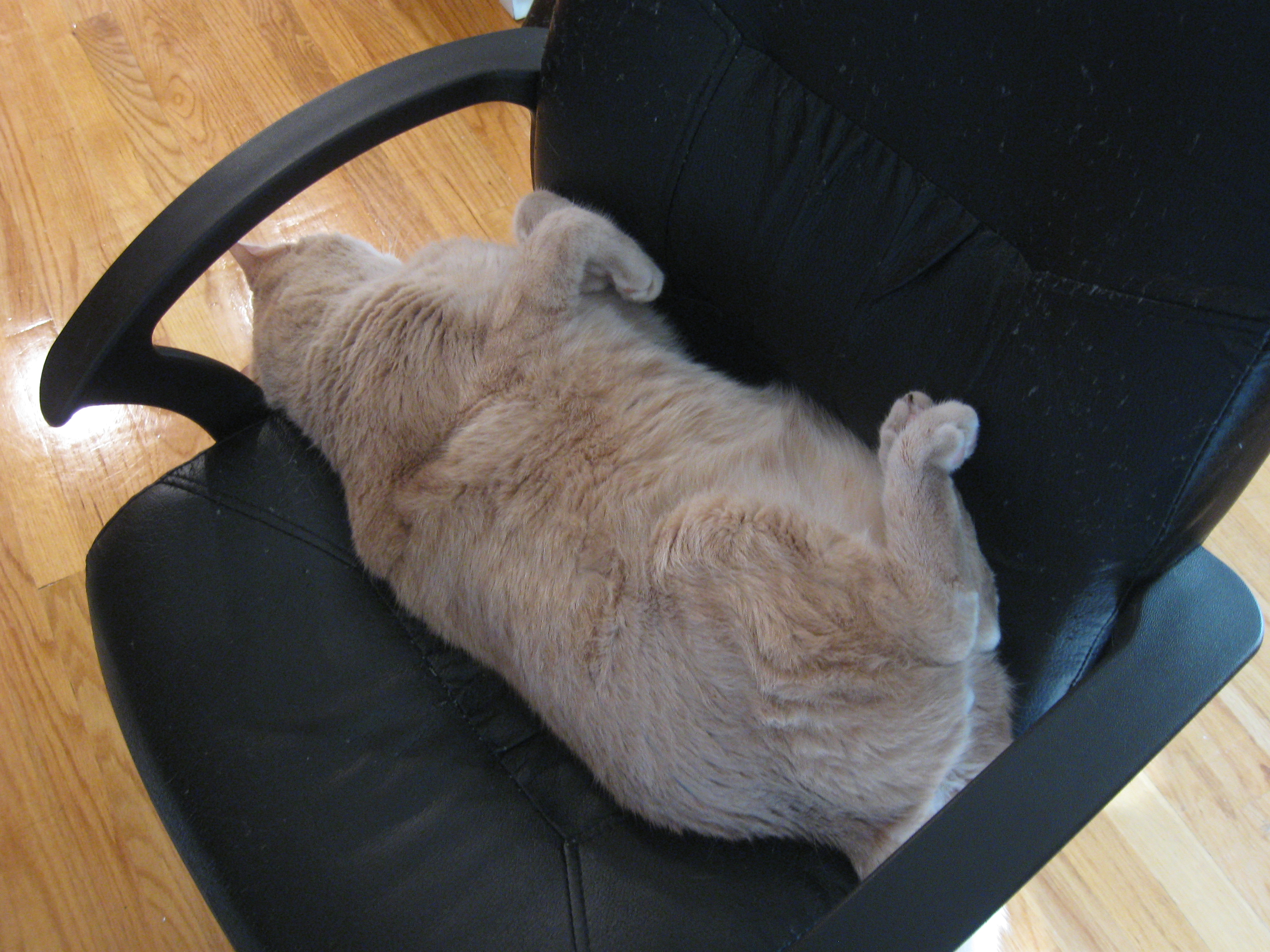
Is it just me, or is a diet in order?

Keeping me company: After our trip to New Orleans, Mr. Ramses has been extra snuggly – and just as lazy as ever.

Out my window: Gah! More snow!  (weeps softly)

Since the ugly heaps from the snowpocalypse last week were starting to melt, this is demoralizing.  Seriously, the sidewalk was only beginning to reemerge – and with it a host of scary things buried for more than a week.  About a block from our apartment, I saw a pile of snow receding to reveal a moldering mattress.  I kid you not.  This newest dusting created more ice than anything else, but also coated several Christmas trees left on the curb for recycling, as well as a sofa and love seat set.

Ah, life in the city.

Okay, Suri, focus.  Assuming I can get my chair back from Mr. Ramses, there’s work to do.

It just makes me sad

I’m sure most of you are already aware that a new edition of Huckleberry Finn is out, in which the word “Nigger” is replaced by “slave.”  The producer of this new edition, Alan Gribben (a professor of English), argues that the substitution will ensure the book does not drop off of more school reading lists and will spare the reader the unpleasantness of repeatedly reading a racial slur.

I will not go on and on here, but I feel that as a teacher and a writer I have to voice an objection to the idea of editing out the parts of our cultural heritage we find unpalatable (not, of course, that we’ve hesitated to do so in the past).

Huck Finn is, ultimately, an indictment of slavery, and we should read it as the author wrote it.  The idea that we might need to “spare” teachers the effort of placing the novel in cultural and historical context for their students or excuse them from having a meaningful discussion about race relations in US history is just sad.  The idea that editors can (or should) sweep in and alter an author’s text to fit with current notions of politically correct behavior is disturbing — almost as much as the idea that such literature should be banned in the first place.

Book Review: Sandman Slim

Last week I blogged about all the lovely new books I got as presents over the holiday, and I promised to post reviews of each as I finished reading them.  So, without further ado, here’s the first review.

Sandman Slim, by Richard Kadrey (388 pages, Urban Fantasy)

This book is written in the first person, which normally turns me off.  But here it really works.  In fact, after the first paragraph, I neither noticed the first person any longer nor could imagine the story being told any other way.  In fact, a lot of what works about the book (and the few things that don’t) are linked directly to the main character’s feeling of rage and alienation, as well as his penchant for self-destructive thoughts and behavior.  All of these smack you with much greater impact when delivered hot and steaming from his screwed-up head.

The protagonist’s voice is probably the most unique thing about Sandman Slim.  He’s ugly, mean, and morally ambiguous.  Kadrey does not hold back in showing us all of Sandman’s neuroses and relating his view of the world as stinking and dark.  There are plenty of times in the story when you don’t like him, when you feel a sort of cruel satisfaction seeing him fail, one that makes you realize you’re actually starting to think just like him.  So, I take my hat off to Kadrey for creating someone so persuasive, who feels so real and so absurdly unreal at the same time.

That said, the story itself didn’t strike me as especially distinctive – a war between Heaven and Hell, a world of magic just outside what mortals acknowledge, fallen angels, evil magicians, and plenty of violence.  But it was strung together well enough, providing enough reason to keep hanging out with the compellingly horrible and delicious Sandman Slim.  That was good enough for me.

My few nits include occasionally cheesy dialogue, Kadrey’s jarring tendency to sometimes forget he’s writing an anti-hero rather than a hero, and the stutter-stop ending.  The big climax comes too soon (or, alternatively, the denouement is overly drawn out).  Further, some of the punch is taken out of the plot in an apparent effort to set things up for the next novel.  But, by-and-large, this book was fun to read (for large chunks at a time, I literally couldn’t put it down).  There’s a sequel out in hardcover now.  As soon as the paperback edition is on the shelves, I’ll definitely pick it up.

In short, if you like gritty urban fantasy that eschews all sugar-coating, you’ll probably enjoy Sandman Slim.

Where did I pack my pen?

For someone who considers herself a homebody, I sure do a lot of traveling.  In 2010 I traveled to Seattle (2x), New Orleans (2x), Boston, the British Virgin Islands, England, Scotland, and Spain.  And that’s just the trips I remember.  I figure I spent at least a quarter of the year away from home (and thus away from my desk).  And, for the first two months of 2011 alone, I have trips planned to New Orleans (where I am as I write this), Salt Lake City, Las Vegas, and Phoenix.

Travel presents a range of delights and agonies, but perhaps one of the most challenging for me is not losing momentum on my writing.  There’s the trip itself, which, if it’s a vacation, can mean getting nothing done, but also the lead-up and unwinding after you get back — all lethal to my writing output.

Sometimes being out and seeing the world is a source of inspiration, prompting unexpected visits from the writing Beast, and the experiences accrued from traveling most certainly benefit us writers.  Getting away from daily life and leaving behind your mundane worries and tasks can be mentally liberating, too.  But, just as often, even if you pack your laptop and best intentions, the writing well remains dry…or ignored altogether.

Here are 2 things I do every time I travel, which unfailingly result in a productivity rate of zero:

1. print out draft versions of short stories or novels with the intent of line-editing them on the plane.  Because you wouldn’t want to be stuck with nothing to do but watch all those free movies on the seat-back screen.  Riiiiiight.

2. pack a blank notebook with the idea that all my “downtime” (cause there’s always so much of that on the road) will be ideal for world-building/brainstorming/plotting.  I have a lot of blank notebooks, many of them now yellowed around the edges.

So far, the only thing I’ve found that works in the slightest is to just stuff the ole’ laptop into my purse (yes, I have a huge purse) and carry it around.  When a free moment or two strikes, I pull it out and keep working on whatever I’d be working on if I was at home.  Pretty prosaic, and pretty hit-and-miss in terms of productivity (also, that shoulder bag gets heavy).  But it’s the best I’ve got so far.

A few other observations: when I’m traveling alone and staying in a hotel, I’m quite productive at night and/or early in the morning.  Along these lines, when I attended Readercon last year I got a ton of writing done.  Being around other writers and attending writing panels was really inspiring.  I’ll be at the Superstars Writing Seminar in Salt Lake later this month and I’m hoping I find the same thing to be true there.

But, given how much I travel, I’d really like to develop more consistent strategies for keeping up with my writing.  So, I’m asking for your input, advice, and tips.  What works for you when you travel, and what tactics are a bust?

A New Year, a new stack of books

My first glimpse of 2011:  a bleary-eyed grab at the alarm clock.  It’s 4:45am and I remember, with faint horror, that I must get up.  There’s a flight to catch; we’re off to New Orleans for a visit to the in-laws.

Staggering out of bed, cramming the last few things into the suitcase, and gulping rather desperately at a too-hot mug of tea, I grab the the book off the top of the pile on my nightstand, “Sandman Slim” by Richard Kadrey, and shove it in my purse.  Rather optimistic to think I’ll do much other than drowse and drool on the plane ride, don’t you think?.

This morning’s blind and random literary snatch, however, was momentous nonetheless, as it anointed the first book I’ll read in 2011.  After the delicious gift-giving frenzy of the holidays I’ve got a nice fat stack of books to plow through, including the aforementioned Kadrey book, as well as:

  • Ysabel, by Guy Gavriel Kay
  • Dervish House, by Ian McDonald
  • Do Androids Dream of Electric Sheep, by Philip K Dick
  • Sixty-One Nails, by Mike Shevdon
  • A Fire Upon the Deep, by Vernor Vinge

So, my New Year’s promise to all of you is the following:  I will read each one and report back with a review.  So, enjoy the start of another waltz round the calendar, and stay tuned for bookwormy goodness in the month to come!

ps. if you’ve already read some or all of these delights…no spoilers, please!

pps. Happy New Year!

The absurdity of it all

I’ve reached a point in the first draft of my novel “Absent” where I’ve had to stop and ask myself:  is this absurd, or is it brilliant?

It’s not a question of shitty first drafts, in which you give yourself permission to suck in order to plow ahead and finish the wretched thing.  The quandary I’m talking about is a different animal altogether.  With a shitty first draft, you know the story is a mess.  You recognize its awfulness and choose to ignore it for the time being.  What I’m experiencing is a complete inability to objectively assess whether the story I’m telling is laugh-out-loud ridiculous or utter genius.

In all probability, it’s somewhere in between.  The fact that I’m incapable of determining this, however, makes me nervous.  I’m usually pretty good at working out whether a story has potential or not.  And while I can step back and identify certain structural problems with the unfolding of the narrative, point to places where character development is inconsistent or where plot holes might be forming, I just can’t  suss out if this damn novel works or not.

This has happened to me once before, and looking back I think I’ve nailed down a possible culprit.  In both cases, when I couldn’t determine if the story worked or not, the underlying problem was a scientific improbability I was struggling to make seem plausible.

In the case of “Absent”, the improbability is time travel.  In the other example (a short story still languishing in a file folder) it was near-future space travel.

Speculative fiction is all about creating worlds where the improbable (and often impossible) seem real.  The trick is to avoid obvious hand-waving in making your speculative elements believable.  I think I have a tougher time doing this with sci fi than with fantasy.  Upon reflection, I suspect this is due to a lack of confidence.

Unlike anthropology (a discipline I think lends itself particularly well to the creation of fantasy-based worlds), science has never been my forte.  Even when I engage focused research on a specific scientific topic, I come away feeling tentative and unsure of my efforts to spin it into a believable speculative world.  This insecurity is surely transmitted when I craft the plot and write the story, calling attention to itself like a big red winter nose.

To solve my problem, I know I need to simply keep at it, to dig in harder with my research and read and dissect more science fiction novels to see how they succeed where I fail…assuming, of course, that a lack of confidence and practice are my problems.

As I write this, it strikes me that another element in the mix might be basing a story in the real world and inserting just one speculative element in it (as opposed to creating a largely speculative world).  Getting readers to accept a world just like ours except for this one, single, crazy thing might be much harder than selling them on a completely speculative world.  Perhaps I haven’t yet accrued sufficient writerly skill to pull this off.  In which case, practice and study still seem like the appropriate route forward.

So, has this happened to anyone else?  Have you ever started into a novel or short story only to realize halfway through you’ve got NO IDEA if it’s working or not?  And, if so, why do you think it happens?

Tell me I’m not alone in this…please!